
Refinishing
How Long Does Hardwood Floor Refinishing Take? A Realistic Timeline
Understand each refinishing stage and how product choice, humidity, floor condition, repairs, color, and project scope can change the timeline.
Direct answer
A hardwood refinishing timeline includes preparation, sanding, detail work, optional stain, finish coats, drying, and cure. The actual duration changes with product instructions, humidity, floor condition, repairs, color choice, room layout, and scope, so a universal number of days is not reliable.
The timeline is a sequence of stages, not one countdown
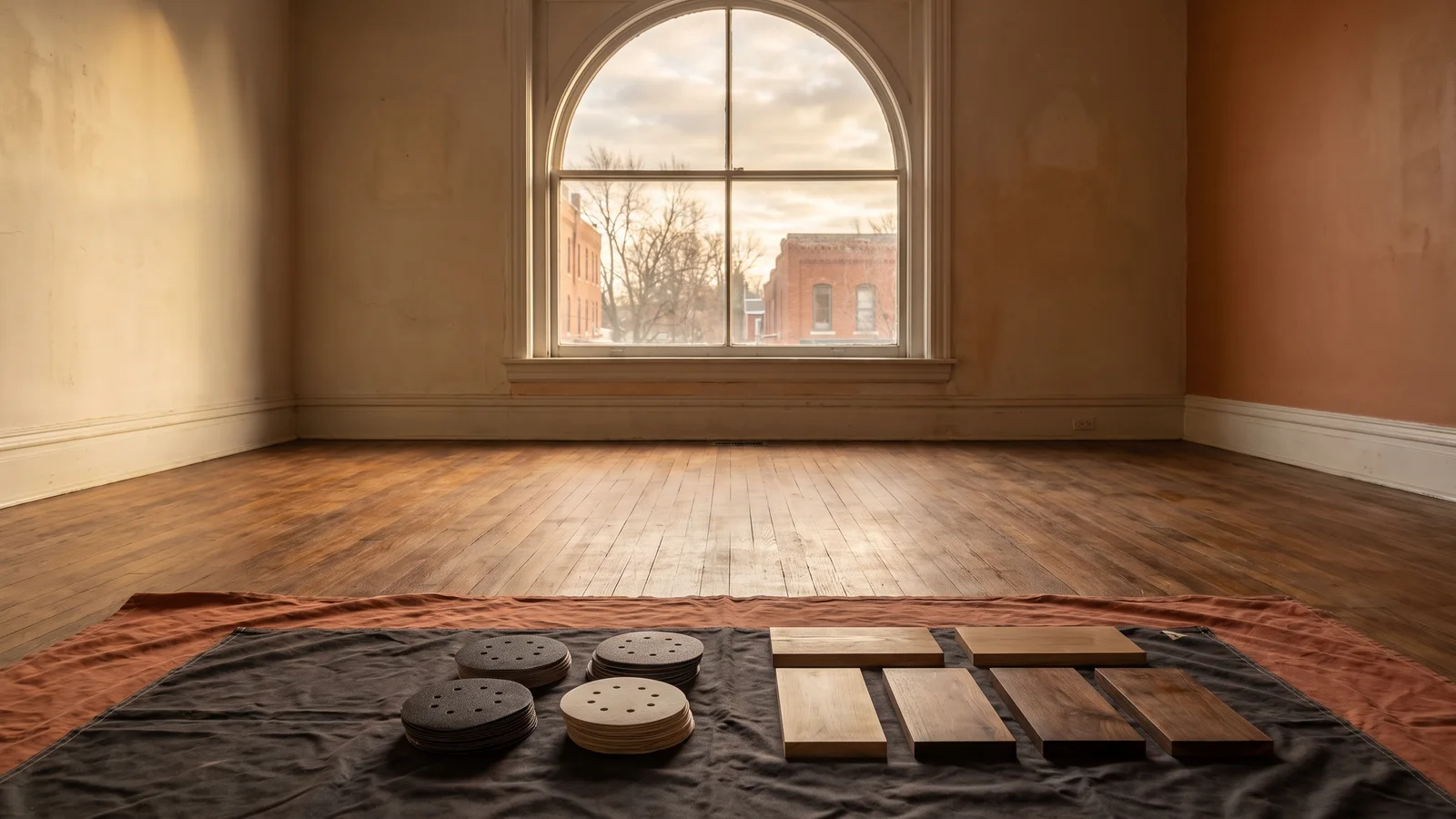
Before equipment starts, the work area must be cleared and protected. The crew confirms repairs, vents, transitions, electrical access, and the route for moving equipment. Sanding then progresses through planned abrasive steps, followed by edge and detail work. The floor is cleaned and inspected before stain or finish; coating over visible sanding defects simply preserves them.
Stain adds both a design decision and a drying requirement. The color should be approved on the prepared floor when possible because wood age, species, lighting, and sanding affect absorption. Each coating step must follow compatibility, coverage, temperature, humidity, recoat, and ventilation instructions. The project schedule therefore belongs to the complete finish system, not to a generic calendar.
| Stage | What can change its duration |
|---|---|
| Preparation | Furniture, containment, access, and repairs |
| Sanding | Condition, coatings, layout, edges, and stairs |
| Color | Sampling, stain choice, absorption, and dry conditions |
| Finish coats | Specific product, recoat window, and environment |
| Return to use | Manufacturer guidance for traffic, furniture, and rugs |
Product, humidity, condition, and scope change the result
Finish labels and technical sheets are the controlling source for product timing. For example, Bona’s current Traffic HD technical data provides its own recoat and use information, while DuraSeal’s Quick Coat material states a product-specific stain dry time. Those numbers apply to those named products under stated conditions; they should never be copied into a promise for an unidentified system.
Humidity and temperature influence evaporation and coating behavior. Floor damage, heavy old finish, adhesive residue, deep scratches, borders, closets, stair parts, or many transitions add active labor. Repair discoveries can also change sequence. A contractor should explain which assumptions support the plan and update the homeowner if the actual surface behaves differently after work begins.
Dry, recoat-ready, and fully cured are different milestones
A surface can feel dry without being ready for every use. Recoat time tells the applicator when the next compatible coat may be applied. Light-traffic guidance describes when limited walking may resume. Full cure refers to later chemical and physical development. Furniture, rugs, pet nails, rolling loads, cleaners, and normal traffic may each have different restrictions.
That distinction is why homeowners should receive instructions for the exact finish used on their floor. Do not substitute advice from a neighbor’s project or a search result naming another product. Ask the contractor to identify the stain, sealer, and topcoat, then keep the manufacturer’s latest care instructions with the project documents.
- Dry to touch does not automatically mean ready for shoes.
- Ready for light traffic does not automatically mean ready for furniture.
- Furniture return does not automatically mean rugs can be placed.
- A finish may continue curing after the room looks complete.
- Manufacturer instructions override general timing examples.
Plan the household around access milestones
Identify critical paths through the home before choosing the sequence. If bedrooms, stairs, the kitchen, or the only bathroom cross the work zone, the scope may need phases or another temporary arrangement. Phasing can preserve access, but it can also add edges, transitions, setup, and time. The cleanest visual result may favor completing a connected area together.
Pets require more than a walking date. Arrange a secure location away from equipment, dust, wet coatings, open doors, and ventilation setups. Plan for nail traction when they return and follow the finish manufacturer’s restrictions. Children also need a route that does not depend on remembering a wet boundary. Practical access planning belongs in the estimate conversation.
Questions that turn a rough duration into a usable plan
Ask for the expected start sequence, the decisions needed before sanding, the products proposed, and the assumptions about repairs and environmental conditions. Request separate milestones for active work, first permitted foot traffic, furniture, rugs, and normal cleaning. This is more useful than asking only when the crew leaves, because the floor still needs protection afterward.
JAVE Hardwood Floors can build a project-specific sequence after seeing the connected rooms, condition, repairs, color direction, and household needs. The schedule remains subject to the agreed products and site conditions. This educational timeline, updated July 23, 2026, is not a universal turnaround guarantee or a substitute for the finish manufacturer’s instructions.
Frequently asked questions
- Can hardwood refinishing be completed in one day?
- A promise cannot be made without knowing the area, condition, repairs, color, finish system, coat schedule, and environmental conditions. Even when active work moves quickly, drying and cure milestones remain. Ask for a product-specific sequence rather than assuming the shortest advertised example applies to your floor.
- Does humid weather slow refinishing?
- Humidity can affect drying and coating behavior, but the response depends on the product and controlled conditions inside the home. The contractor should monitor the environment and follow the manufacturer’s limits. Calendar weather alone does not determine the answer, and a dehumidifier is not a substitute for product instructions.
- When is the project considered finished?
- Crew completion, light foot traffic, furniture return, rug placement, cleaning, and full cure can be separate milestones. The practical handoff should identify each one for the exact finish system. A room looking complete does not mean every load or household activity is immediately appropriate.
Sources
- Bona: Traffic HD Technical Data Sheet(accessed 2026-07-23)
- DuraSeal: Quick Coat Product Information(accessed 2026-07-23)
Talk through your flooring project with JAVE
Share the service, ZIP code, and room details to start a project-specific estimate.