
Refinishing
What to Expect From Hardwood Floor Sanding and Refinishing
Follow the refinishing process from inspection and room preparation through sanding, detail work, stain, finish, ventilation, and handoff.
Direct answer
Sanding and refinishing typically includes inspection, clearing and isolating the work area, progressive sanding, edge and detail work, cleaning, optional stain, compatible finish coats, ventilation, and product-specific return-to-use instructions. Repairs and site conditions can change that sequence.
Before sanding, confirm the floor and the scope
The first step is deciding whether the floor is suitable for the proposed sanding. Construction, remaining wear layer, previous work, fasteners, damage, movement, stains, and moisture concerns all matter. Rooms, closets, stairs, vents, thresholds, repairs, trim, furniture, appliances, and exclusions should appear in the written scope so both sides expect the same surfaces.
Color and finish decisions should not wait until the floor is bare unless the proposal clearly reserves time for them. Discuss sheen, general color direction, stain sampling, finish system, household sensitivities, and access. Wood and light affect color, so inspiration photos are useful references rather than exact formulas. The selected products determine later dry and cure guidance.
Prepare for equipment, dust control, and limited access
Furniture and movable items leave the work area. Fragile wall and shelf items nearby may need removal because machinery can cause vibration. Confirm routes for hoses and equipment, electrical needs, parking, alarms, vents, doors, and rooms that remain occupied. Food preparation, sleeping arrangements, children, pets, and access to bathrooms deserve a specific plan.
Modern collection equipment and containment can substantially manage dust, but a zero-dust promise is not realistic. EPA remodeling guidance recommends isolating work, controlling dust, keeping pollutants from occupied areas, and ventilating appropriately. Ask how doorways, HVAC openings, cabinets, and adjacent spaces will be treated and what cleanup is included.
- Remove furniture, window treatments, and fragile nearby objects as agreed.
- Arrange a safe off-site or isolated space for pets and children.
- Identify needed paths through the home before the crew arrives.
- Confirm dust containment, HVAC, and ventilation procedures.
- Protect or relocate food, medications, and sensitive electronics.
Sanding progresses from leveling to final surface preparation
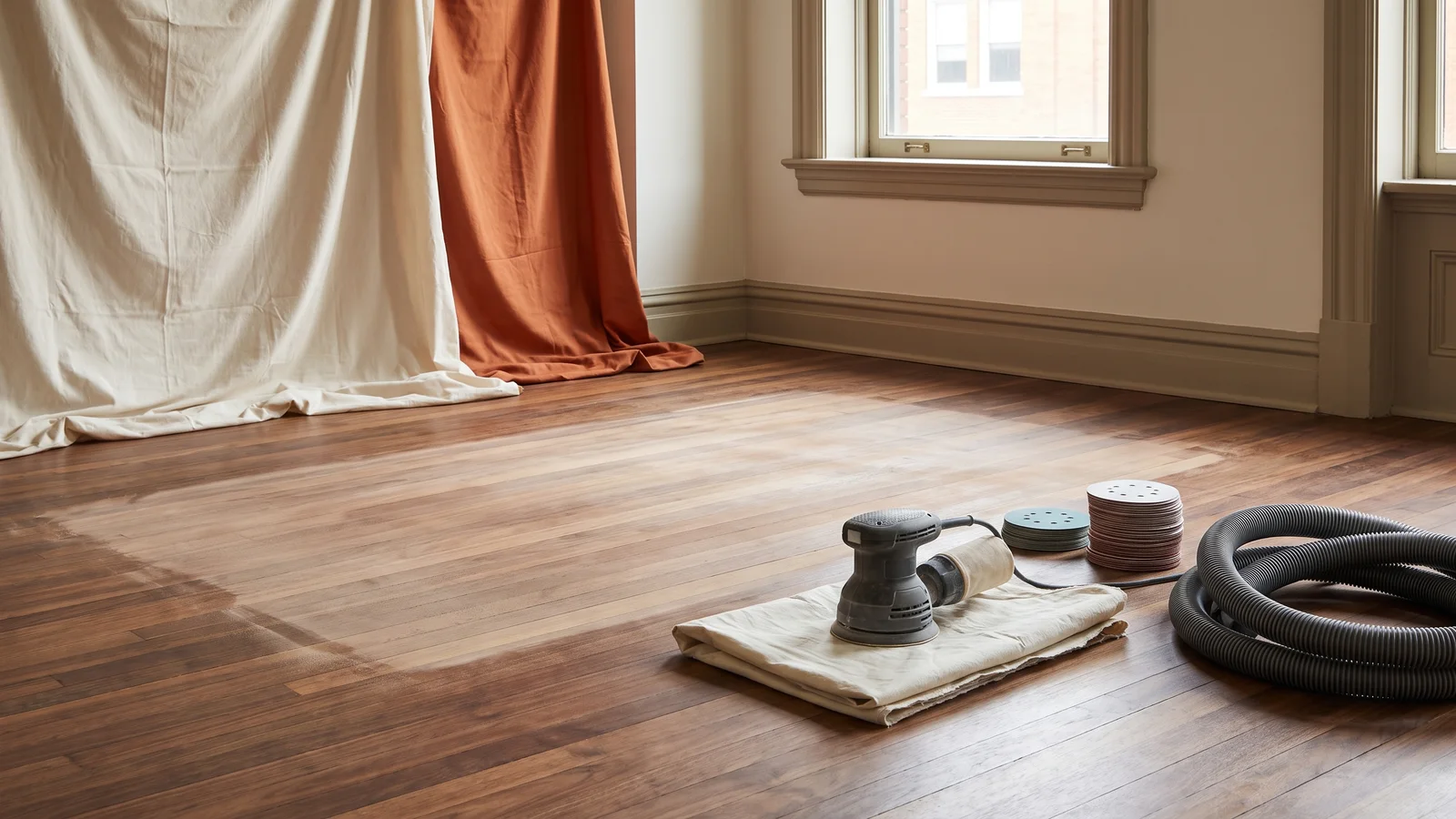
The crew uses a planned abrasive sequence rather than one pass. Early sanding removes coating and addresses surface variation; later steps refine the scratch pattern for color and finish. Edgers and detail tools reach perimeters, corners, closets, stair parts, and areas around fixed elements. Different machines can leave different marks, so blending and inspection are essential.
Sanding cannot invisibly erase every condition. Deep stains can remain below the practical sanding depth. Gaps may change seasonally. New repair boards can vary in color and grain. Severe movement or moisture problems need correction, not simply more abrasion. The homeowner should be informed when the exposed floor changes the agreed repair or color plan.
| Process point | Homeowner expectation |
|---|---|
| Initial sanding | Old coating and surface conditions become clearer |
| Edges and details | Perimeters and fixed elements require separate tools |
| Repairs | New and old boards may not absorb color identically |
| Final preparation | Scratch pattern and cleanliness affect appearance |
| Sample approval | Color is judged on the prepared wood and room light |
Stain and finish follow a specific compatible system
After final cleaning, stain may be applied when part of the design. Excess, absorption, temperature, humidity, and dry time influence when coating can continue. Sealer and topcoats must be compatible and applied within their instructions. More coats, faster dry claims, or a different chemistry are not automatically better; the entire named system needs to fit the floor and schedule.
Ventilation should support the product directions and indoor-air plan without introducing contamination onto wet finish. EPA notes that renovation materials can affect indoor air, so source control, labels, and ventilation matter. Occupancy decisions depend on products and conditions. Ask for product names and current technical instructions rather than relying on a generic odor test.
The handoff continues after the last coat
The floor may have separate milestones for limited socks-only traffic, shoes, pets, furniture, rugs, cleaning, and full cure. Follow the exact manufacturer’s sequence. Use felt protection when permitted, lift rather than drag furniture, and avoid wet cleaning until released. Area rugs and rubber or colored backings can require additional care.
JAVE Hardwood Floors offers sanding and refinishing in Kansas City and communities within approximately 60 miles. The actual process depends on condition, connected spaces, repairs, color, finish system, humidity, and scope. This article explains the workflow but does not promise a dust-free project, a fixed duration, a guaranteed stain match, or universal cure time.
Frequently asked questions
- Do I need to leave the home during sanding and refinishing?
- That depends on work-zone access, products, ventilation, household sensitivities, children, pets, and whether essential rooms remain reachable. Discuss occupancy before scheduling and follow safety and product instructions. Staying elsewhere can simplify logistics, but this article cannot make a universal requirement for every project.
- Will sanding remove every dark stain?
- No guarantee is possible. Some discoloration is confined near the surface; other stains penetrate deeply or involve board and subfloor conditions. Excessive sanding can damage the floor. Inspection after initial preparation may lead to localized board replacement, a color adjustment, or an accepted visible variation.
- Is dustless sanding completely free of dust?
- No. Effective extraction and containment can greatly reduce airborne and settled dust, but equipment, edges, repairs, room openings, and normal movement prevent a literal zero-dust promise. Ask what controls and cleanup are included and protect sensitive belongings as agreed.
Sources
- US EPA: Best Practices for Indoor Air Quality When Remodeling(accessed 2026-07-23)
- NWFA: Technical Guidelines and Publications(accessed 2026-07-23)
Talk through your flooring project with JAVE
Share the service, ZIP code, and room details to start a project-specific estimate.